
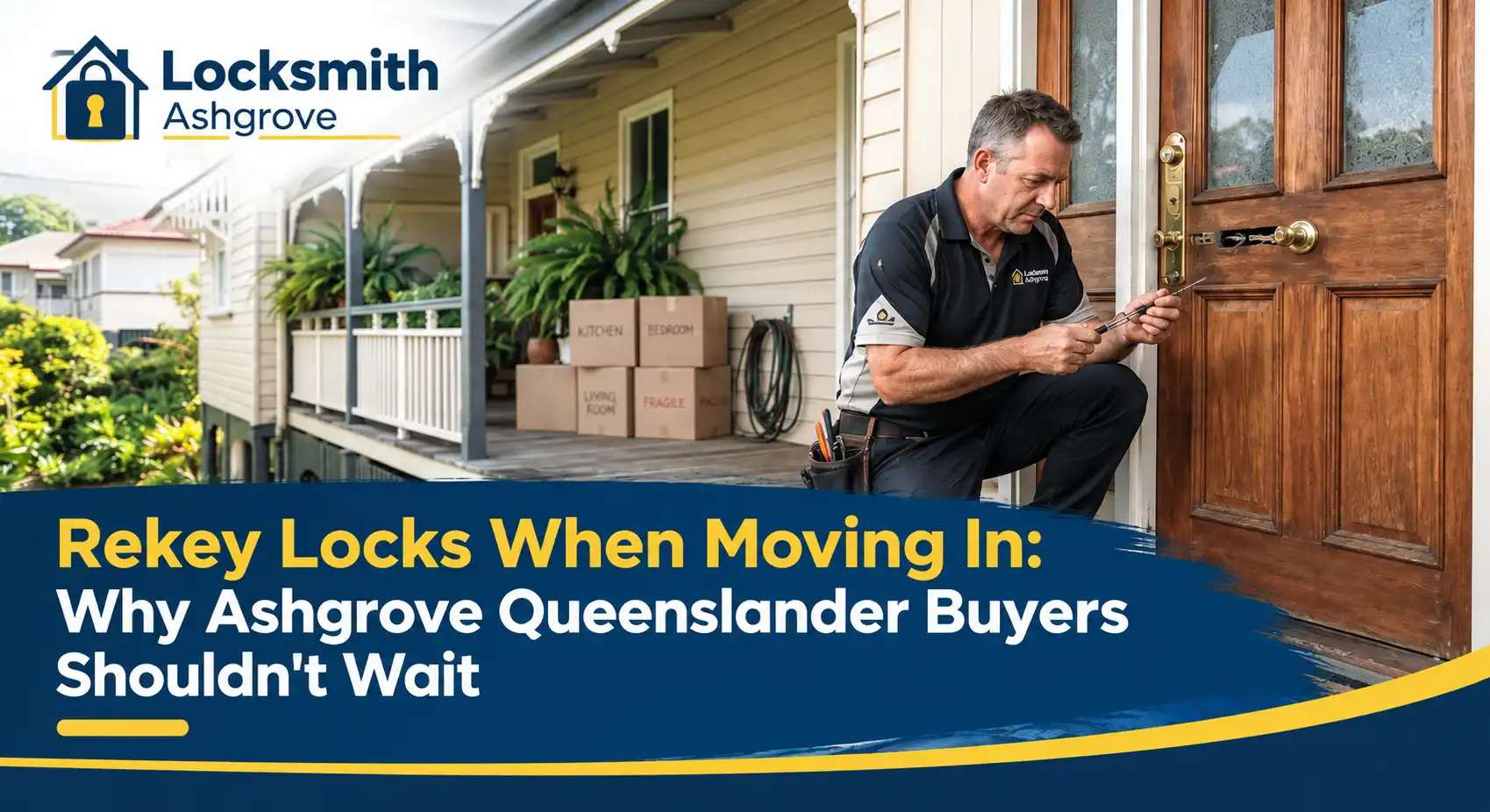
New Keys Don’t Mean a New Lock
Moving into a Queenslander in Ashgrove is exciting, but there’s one security step a lot of new homeowners overlook entirely: choosing to rekey locks when moving in rather than assuming the keys handed over at settlement are the only ones that exist. Getting a set of keys from the previous owner or agent feels like enough, but it doesn’t actually tell you how many other copies of those keys exist, or who might still be holding one.
Real estate agents, tradespeople, previous tenants, cleaners, and even old family friends of the previous owners could all have had a key cut at some point — and in a suburb like Ashgrove, where many Queenslander homes have passed through several generations of the same family or been rented out over the years, the number of potential key holders can genuinely be higher than for a newer property. Changing the locks entirely is one option, but choosing to rekey locks when moving in gives you the same security benefit for a fraction of the cost and effort, since it reuses your existing hardware rather than replacing it outright.
For most new homeowners, this step gets pushed to the bottom of an already long moving checklist, sitting somewhere below unpacking boxes and setting up internet. But of everything on that list, it’s one of the few genuine security gaps that a house move creates, and it’s worth understanding exactly why before you decide it can wait.
What Rekeying Actually Involves
Rekeying means a locksmith opens up the existing lock cylinder and replaces the internal pins so that only a new key will operate it. Any old keys, no matter how many copies exist, stop working the moment the job is done. It’s a much faster process than full replacement, and it works on almost any standard lock without needing to touch the door or frame, which means no drilling, no new hardware to purchase, and no visible change to your doors at all.
This is different from simply changing the whole lock, which involves removing the old hardware and fitting something new. Rekeying keeps your existing lock’s appearance and function exactly the same — it’s only the internal mechanism that changes. For Queenslander owners who value keeping their original door hardware intact, this makes rekeying the more practical and character-preserving choice in the vast majority of moving-day situations.
Pro Tip:
Ask your locksmith to rekey every external door to the same key, so you’re not juggling several different keys for one house.
Why Day One Matters More Than People Realise
It’s easy to tell yourself you’ll get around to rekeying eventually, especially with everything else involved in a house move. But every day that passes with the old keys still active is a day where someone else could technically let themselves in. Most break-ins involving a working key rather than forced entry happen precisely because a previous key holder still had access long after they should have — not because of any dramatic security failure, but simply because nobody got around to addressing it.
Choosing to rekey locks when moving in, ideally before you’ve even finished unpacking, removes that uncertainty completely. It’s one less thing to worry about while you’re settling into a new suburb and getting to know your surroundings, and it means you can genuinely relax into the new home rather than wondering, even briefly, who else might still hold a key.
“We rekey more locks for new Ashgrove homeowners in the first week after settlement than at any other time. On the older Queenslanders especially, it’s genuinely one of the best security decisions you can make early.” — Locksmith Ashgrove
Queenslander Homes Have Their Own Considerations
Ashgrove’s mix of character Queenslanders and older post-war homes means the number of potential key holders can be higher than for a brand-new build. Long-term rentals, multi-generational family ownership, and decades of tradespeople coming and going for maintenance all add up over the lifespan of an older home. If your new Queenslander still has its original mortice locks, this is also the perfect moment to have a locksmith assess whether those locks can be rekeyed in place or whether age and wear mean a more involved approach is needed.
If you’ve bought into one of these older properties, it’s worth mentioning the home’s history to your locksmith, since they can advise on whether a full lock upgrade might be worthwhile alongside the rekey, particularly for external doors that have seen decades of use and multiple past occupants.
Warning Sign:
If your new home’s keys look freshly cut or mismatched in style, ask the agent directly how many sets were issued during the sale process.
Rekeying Also Makes Sense Beyond Moving Day
While moving in is the most common trigger, choosing to rekey locks isn’t limited to house moves. Ending a share-house arrangement, going through a separation, or simply losing track of how many spare keys you’ve handed out over the years are all good reasons to have your locks rekeyed, even if you’re not moving anywhere. Anyone who’s ever handed a key to a cleaner, a gardener maintaining a Queenslander’s often larger yard, or a visiting relative and later lost track of whether it was returned has a genuine reason to consider the same process.
The underlying principle is the same in every case: if you can’t say with certainty who currently holds a working key to your home, rekeying resolves that uncertainty quickly and affordably, without the disruption of a full lock replacement.
What Happens If You Skip Rekeying Altogether
Some new homeowners decide to skip the step entirely, reasoning that the odds of an old key holder actually returning are low. In most cases, nothing ever comes of it — but the risk isn’t just about a stranger walking in one day. It’s also about smaller, more mundane scenarios: a former tenant swinging by out of habit, a tradesperson returning to collect equipment they think they left behind, or a previous owner’s relative who assumes the house is still occupied by family, which is a genuinely common scenario with long-held Queenslander properties. None of these situations are necessarily malicious, but they’re still access you haven’t consented to as the new owner.
There’s also a practical insurance angle worth considering. Some home insurance policies specify that reasonable security measures need to be in place for a claim to be honoured in full, and an unrekeyed lock after a change of ownership can occasionally become a point of dispute if a claim ever needs to be made.
Quick Checklist for New Homeowners
Work through this in your first week in a new Ashgrove home.
- Book a locksmith to rekey all external doors before or right after settlement
- Ask how many key sets were issued to agents, tradespeople, or tenants
- Request all external locks be rekeyed to a single matching key
- Have a locksmith assess original mortice locks if your home is an older Queenslander
- Update any smart lock codes or garage remotes separately, since rekeying doesn’t cover these
How This Fits Into Your Broader Moving Checklist
Most people moving house are juggling a long list of priorities — connecting utilities, redirecting mail, updating their address with various services, and the physical work of unpacking itself. Rekeying tends to get overlooked simply because it isn’t urgent in the way a leaking pipe or a broken appliance would be. Nothing about an un-rekeyed lock announces itself as a problem the way other moving-day issues do.
That’s exactly what makes it worth treating as a priority rather than an afterthought. Scheduling the rekey for the same day as settlement, or the day you collect keys, means it’s handled before you’ve even had time to forget about it.
Conclusion
A new home should feel like a fresh start, and that includes knowing exactly who has access to it. Choosing to rekey locks when moving in is a small, affordable step that removes a genuine unknown from your first weeks in the property, and it’s something most homeowners only wish they’d done sooner once they think it through properly.
Whether you’ve just settled into a heritage Ashgrove Queenslander or a more recently built home nearby, the same logic applies. Rekeying locks when moving in isn’t about assuming the worst of anyone who’s held a key before you — it’s simply about starting your time in a new home with complete certainty over who can walk through your own front door.